Nigeria’s Federal Government says people with fake or unverified degrees will no longer take part in the National Youth Service Corps (NYSC) or secure public sector jobs, as it moves to tighten control over academic records.
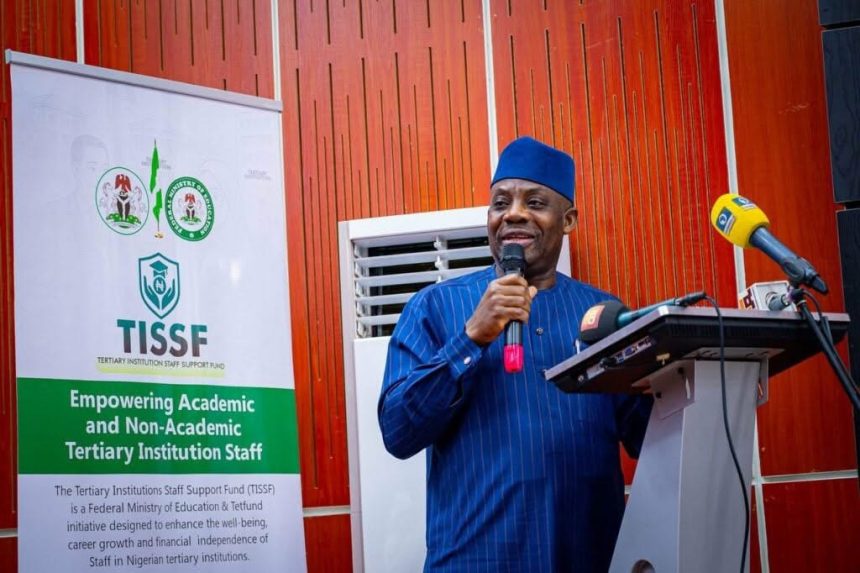
Education Minister Dr. Maruf Alausa announced the measure on Thursday at a national capacity-building programme for school representatives supporting the Nigeria Education Repository and Data Bank (NERD). The initiative aims to strengthen compliance and protect the integrity of academic records across tertiary institutions.
Alausa said reliable data is vital for governance and policy decisions. “Data is the lifeblood of effective governance. It enables us to understand the challenges we face, so that we can design and implement effective solutions, as well as monitor and evaluate our progress,” he said. “Without data, we are flying blind. And that is not what this government is about.”
The NERD platform serves as a national digital system that stores and verifies academic records from universities, polytechnics, monotechnics and colleges of education. According to the minister, the system assigns national credential numbers, manages credential revocation, and hosts a repository for academic theses and publications.
Within four months of its rollout, nearly 100,000 digital student submissions have been preserved on the platform. More than 250 tertiary institutions, 133,000 students, and 6,800 lecturers are now enrolled. The system is supported by 655 focal officers across institutions and over 1,000 digital service centres, which have created about 3,000 jobs.
The minister also confirmed that the government had acted against Nigerians who obtained degrees from unaccredited foreign institutions. He said investigations revealed cases of people receiving doctoral degrees within months from universities operating in single-room offices.
“Based on the President’s directive, we conducted full investigations… That has been put to a complete stop. And all of those people that got those illegal certificates have all been thrown out of our civil service, public service,” Alausa said.
Nigeria has faced persistent challenges with forged certificates and weak record-keeping systems. Investigations in recent years exposed degree mills in parts of West Africa where some Nigerians obtained qualifications in unusually short periods.
Officials say the new repository will improve verification of academic credentials and help restore trust in Nigeria’s education system.