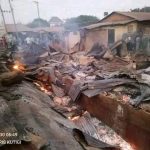
What happened in Woro, a remote community in Kaiama Local Government Area of Kwara State, was not a tragedy born of mystery or suddenness. It was not an ambush without warning. It was not an intelligence failure. What happened in Woro was a catastrophe foretold, acknowledged, and then disastrously ignored.
Months before blood was spilled, before homes were set ablaze, and before women and children were dragged into captivity, the attackers announced themselves. They wrote a letter. A formal warning. A chilling declaration of intent. That letter was delivered to the district head, forwarded to the Emir, and brought to the attention of government authorities. In any serious security system, that should have triggered sustained surveillance, reinforced deployment, and relentless vigilance.Instead, what followed was a tragic exercise in complacency.
Security forces were deployed briefly, almost ceremonially, and then withdrawn when the attackers did not strike on a convenient timetable. That decision, this reckless withdrawal, remains the most damning aspect of the Woro massacre. It raises a fundamental and painful question: when criminals give notice of violence, why does the state respond with impatience rather than preparation?
This was not a case of limited information. This was not a rumour whispered in the dark. This was a declared threat. To abandon a vulnerable, forest-encircled community like Woro under such circumstances was to knowingly expose civilians to danger. It was to mistake silence for safety and delay for disappearance. Let us be honest, when a threat is declared and security is withdrawn, what follows is not fate—it is failure.
I find it deeply troubling that in a country grappling with banditry and terrorism, we still struggle to understand that absence of immediate action does not mean absence of intent. Criminal groups do not operate on government schedules. They wait. They observe. They return when vigilance fades. That is precisely what happened in Woro.
The massacre has laid bare a recurring pattern in our security response: reaction without persistence. Troops are deployed after warnings or public outcry, only to be withdrawn once attention shifts elsewhere. Rural communities are left exposed, forgotten, and forced to absorb the consequences of decisions taken far from their reality.
Over 160 lives were reportedly lost, not because the danger was unknown, but because it was underestimated. Homes were destroyed. Families were shattered. Women and children were abducted. And yet, even in the aftermath, what remains unclear is who authorised the withdrawal of security forces and on what grounds such a decision was justified.
Security is not about optics or temporary reassurance. It is about continuity, intelligence-driven presence, and the understanding that prevention is always cheaper than burial. When warnings are treated as routine correspondence rather than alarms, the state abdicates its most basic responsibility: the protection of life.
The people of Kaiama, like countless rural communities across Nigeria, are not asking for miracles. They are asking for seriousness. They are asking that when danger is announced, it is met with resolve, not retreat. They are asking that intelligence leads to action, not paperwork.
If those responsible for withdrawing security from Woro are not questioned, if lessons are not learned, and if policies are not reformed, then Woro will not be the last name added to our growing list of preventable disasters.
This is not merely about mourning the dead; it is about confronting negligence. It is about insisting that governance must mean foresight, not excuses. And above all, it is about ensuring that no community is ever again left defenseless after sounding the alarm.
Woro warned. The state listened. And then the state walked away. That, more than anything else, is the true tragedy.